
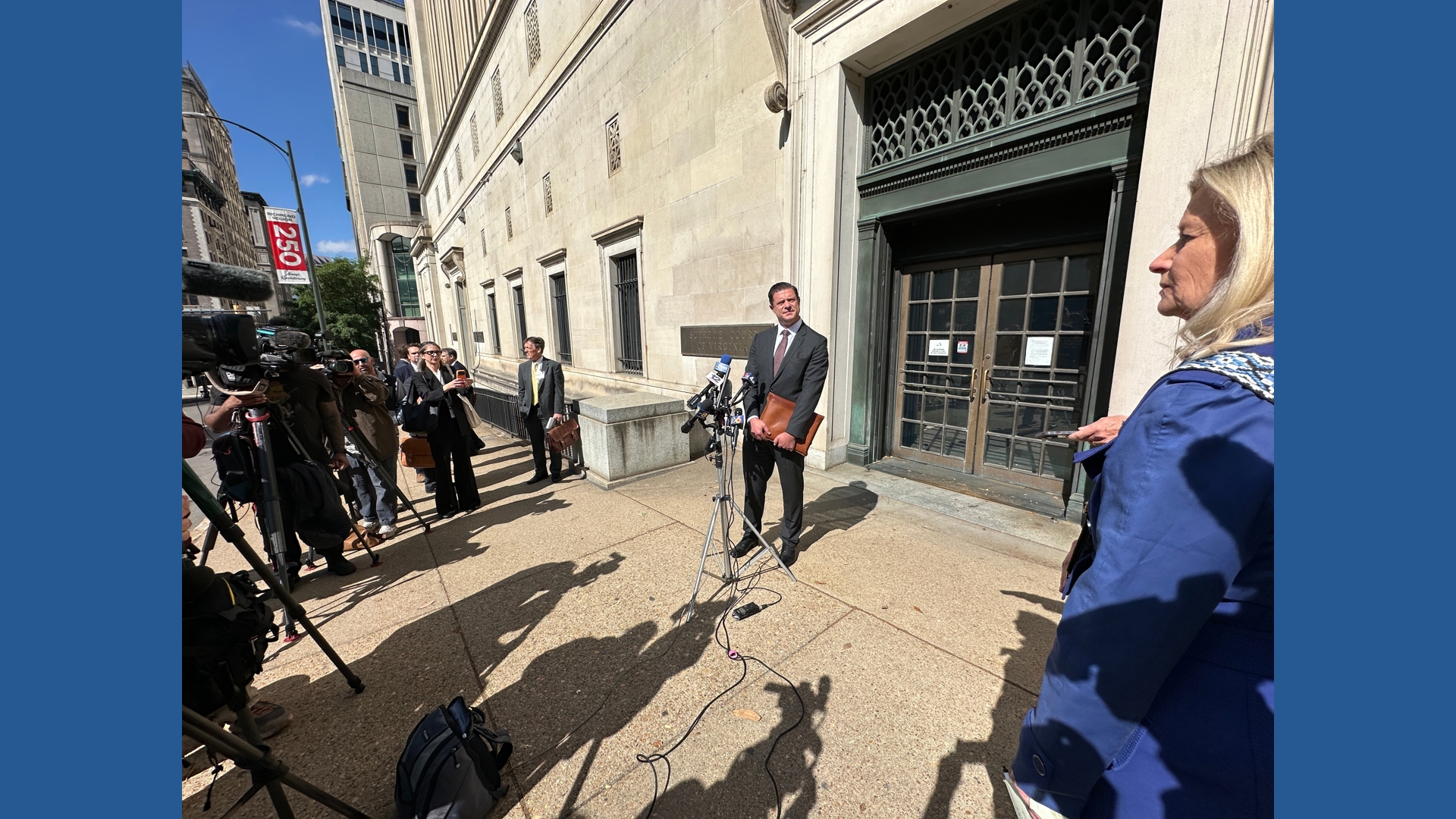
Virginia’s highest court is at the center of a high-stakes redistricting battle as it weighs whether to block a voter-approved congressional map that clearly benefits Democrats. The decision could reshape the state’s political landscape for the next decade—and test the boundaries between popular will, constitutional interpretation, and partisan balance.
Unlike in many states where redistricting remains under legislative control, Virginia established an independent commission in 2020 to draw fairer congressional and legislative boundaries. But when that commission deadlocked, control reverted to the state Supreme Court. The resulting map, crafted by court-appointed special masters, heavily favors Democratic candidates—creating a 7–3 Democratic advantage in the U.S. House delegation from a state that has voted for both Democratic and Republican presidents in recent cycles.
Now, the Virginia Supreme Court is reconsidering its own role—and the legality of a map born from judicial intervention.
The Origins of the Current Map
The roots of this controversy lie in a 2020 constitutional amendment passed by Virginia voters. Tired of decades of partisan gerrymandering, 66% of voters approved the creation of the Virginia Redistricting Commission, composed of eight lawmakers and eight citizens, tasked with drawing fair congressional and state legislative maps.
But the commission failed to reach an agreement in 2021. Under the amendment, responsibility shifted to the Supreme Court of Virginia, which appointed two special masters—retired judges—to draw the maps. Their final product created 7 Democratic-favored districts, 3 Republican-favored, and zero truly competitive seats.
Republicans challenged the map, arguing it violated the state constitution’s requirements for “equal population,” “contiguity,” and restrictions on splitting localities. They also questioned the court’s authority to delegate map-drawing to unelected special masters. The court initially upheld the map in 2022, letting the elections proceed.
But in 2023, after a shift in the court’s ideological balance with the addition of more conservative justices, the court agreed to rehear the case—raising the possibility of overturning its prior decision.
Why This Map Favors Democrats
On paper, the map reflects Virginia’s shifting demographics: growing urban and suburban populations in Northern Virginia, Richmond, and Hampton Roads lean Democratic. But critics argue the map goes beyond demographic reality into partisan engineering.
For example: - The 7th District stretches 120 miles from suburban Richmond to the edge of Charlottesville, connecting Democratic enclaves while isolating Republican strongholds. - The 5th District, once a competitive swing seat, was redrawn to include more rural, conservative areas—but also packed in Democratic voters from Lynchburg and Danville, making it a Democratic lean despite the region’s GOP history.
Political data from the 2020 presidential election shows that the current districts would have delivered Joe Biden 7 of 11 seats with only 54% of the statewide vote—a seat efficiency rate that exceeds national averages for Democratic maps.
This isn’t just about numbers. It’s about perception. When a court-drawn map produces such a lopsided outcome, it raises questions: Is this fairness—or an institutional tilt?
Legal Grounds for Challenging the Map
The primary legal arguments against the map hinge on three constitutional clauses:
- Equal Population: Districts must be nearly equal in population. The current map has variances of up to 5%, which exceeds the 1% standard federal courts often apply. While the Virginia Constitution doesn’t specify a tolerance, plaintiffs argue such disparities dilute some votes more than others.
- Contiguity: Districts must be physically connected. Critics claim the 7th District violates this by relying on a narrow, non-residential corridor along I-64 to link distant areas—essentially a “land bridge” of highway and woodland with no community ties.
- No Unjustified Splitting of Political Subdivisions: The map splits 37 of Virginia’s 95 counties and 20 of 38 independent cities. Plaintiffs argue many splits lack justification and were used to cherry-pick favorable voters.
Additionally, Republicans argue the court overstepped by delegating redistricting to special masters without accountability or public input, calling it an “end-run” around democratic process—even if the original commission failed.
The Role of Voter Approval in the Debate
One major counterpoint: the redistricting commission was created by a voter-approved constitutional amendment. That gives the process democratic legitimacy, supporters say, even if the outcome favors one party.
But here’s the nuance: voters approved the process, not the map. They didn’t ratify the final boundaries—only the mechanism for creating them. That distinction matters.
Supporters of the current map argue that the court acted within its authority under the amendment. They note that no commission, elected or independent, is immune to deadlock—and the judiciary was the designated fallback.
Moreover, they highlight that the special masters held public hearings, accepted thousands of comments, and used nonpartisan criteria like compactness and community integrity. The Democratic skew, they argue, reflects Virginia’s actual political geography, not manipulation.
Still, the irony isn’t lost: a reform designed to end gerrymandering may have produced one of the most lopsided maps in the state’s history—just via judicial, not legislative, hands.
Real-World Consequences of a Court Intervention
If the Virginia Supreme Court blocks the current map, the implications go far beyond legal theory.
First, timing is critical. Any new map would need to be in place before the 2026 elections—and possibly affect off-cycle races. Rushed redistricting risks voter confusion, incumbent displacement, and legal chaos.
Second, incumbents are already entrenched. Congresswomen like Abigail Spanberger (VA-07) and Jennifer McClellan (VA-04) have built campaigns around their current districts. Redrawing lines could force tough primary battles or even retirement.
Third, public trust is at stake. If the court overturns a map drawn under a voter-mandated process, it risks being seen as partisan—especially if the new map benefits Republicans. Conversely, upholding a Democratic-favored map may fuel claims of judicial activism.
Virginia is not alone in this. States like New York and Ohio have seen courts toss maps from both parties in recent cycles. But Virginia’s case is unique because the judiciary itself created the map under a direct voter mandate.
What a “Fair” Map Might Look Like
A truly neutral map would aim for: - Maximum contiguity - Minimal splitting of counties and cities - Compact shapes - Respect for communities of interest - Competitive districts where possible
Using those criteria, analysts have modeled alternatives. One nonpartisan simulation from the Princeton Gerrymandering Project suggests Virginia could support 5–6 Democratic seats, 4–5 Republican, and 2–3 toss-ups—reflecting the state’s status as a purple battleground.
For instance: - The 2nd District (Hampton Roads) and 7th District (Richmond to Charlottesville) could be restructured to be more compact. - The 5th and 6th Districts (south and southwest Virginia) could be redrawn to reduce urban-rural disconnects. - Northern Virginia’s 8th, 10th, and 11th districts could be slightly rebalanced to allow for one competitive suburban seat.
None of this erases Democratic advantage—Virginia is trending blue—but it could restore competitive pressure and voter choice.
The Bigger Picture: Judicial Redistricting as a Double-Edged Sword
Virginia’s struggle highlights a national dilemma: when legislatures fail to draw fair maps, who should step in? Commissions? Courts? A bipartisan panel?

Judicial redistricting is rare but not unprecedented. In Pennsylvania, the state Supreme Court drew a new congressional map in 2018 after striking down a GOP gerrymander. The result: more competitive districts and a swing from 13–5 Republican to 9–9 in the delegation.
But courts aren’t designed to be cartographers. They lack staff, time, and political accountability. Special masters help, but their work can still feel opaque to voters.
Moreover, as courts grow more politicized, their redistricting decisions face legitimacy challenges—especially when outcomes clearly benefit one party.
Virginia’s experiment shows both the promise and peril of judicial intervention. It avoided a legislative land grab—but may have delivered a subtler form of partisan imbalance.
A Path Forward: Reform After the Ruling
Regardless of how the court rules, Virginia needs a long-term fix.
Options include: - Revising the constitutional amendment to require backup commissions if the primary one deadlocks - Setting stricter technical standards (e.g., maximum district deviation, contiguity rules) - Requiring public simulation tools to assess partisan impact before adoption - Establishing a nonpartisan redistricting staff to support the commission
The current crisis is an opportunity. If Virginia can refine its process—keeping voter intent central while minimizing judicial overreach—it could become a model for other states.
But that requires humility. No system is perfect. But transparency, consistency, and accountability are achievable.
Conclusion: The Court Holds More Than a Map in Its Hands
The Virginia Supreme Court isn’t just deciding the fate of 11 congressional districts. It’s shaping how democracy functions in a polarized era.
Upholding the current map acknowledges judicial authority and demographic reality—but risks entrenching one-party dominance.
Striking it down restores competitive balance—but could look like partisan retaliation, especially if Republicans gain from the change.
The best outcome isn’t a win for Democrats or Republicans. It’s a process that earns public trust—where maps reflect people, not power.
If the court acts narrowly, based on clear constitutional violations—not political preference—it can uphold the rule of law without undermining reform. That’s the delicate balance it must strike.
For voters, the message is clear: redistricting reform doesn’t end with a commission or a court order. It requires constant vigilance, civic engagement, and a demand for fairness—no matter which party benefits.
FAQ
Why is the Virginia Supreme Court involved in drawing congressional maps? Because the voter-created Redistricting Commission deadlocked in 2021, the state constitution transferred map-drawing authority to the Supreme Court as a fallback.
Does the current map violate the U.S. Constitution? Federal courts have not ruled on this, but the challenge is based on the Virginia Constitution, particularly clauses on equal population, contiguity, and locality splitting.
How does the map favor Democrats? It creates 7 districts with Democratic advantages and 3 Republican-favored ones, despite Virginia being a swing state, reducing competitive races.
Could a new map affect the 2024 elections? Unlikely. The current case is focused on the legal validity of the map, but any replacement would more likely take effect for 2026 unless faster action is ordered.
Have other states had courts draw their maps? Yes—Pennsylvania, New York, and North Carolina have all had courts intervene in redistricting due to gerrymandering or commission failures.
What happens if the court blocks the map? The legislature or a new commission could redraw it, or the court might appoint different special masters to create a revised version.
Is gerrymandering illegal in Virginia? The state constitution bans favoring or disfavoring incumbents or political parties, but enforcement relies on court interpretation and challenges.
FAQ
What should you look for in Virginia Supreme Court Weighs Fate of Democrat-Favored House Map? Focus on relevance, practical value, and how well the solution matches real user intent.
Is Virginia Supreme Court Weighs Fate of Democrat-Favored House Map suitable for beginners? That depends on the workflow, but a clear step-by-step approach usually makes it easier to start.
How do you compare options around Virginia Supreme Court Weighs Fate of Democrat-Favored House Map? Compare features, trust signals, limitations, pricing, and ease of implementation.
What mistakes should you avoid? Avoid generic choices, weak validation, and decisions based only on marketing claims.
What is the next best step? Shortlist the most relevant options, validate them quickly, and refine from real-world results.